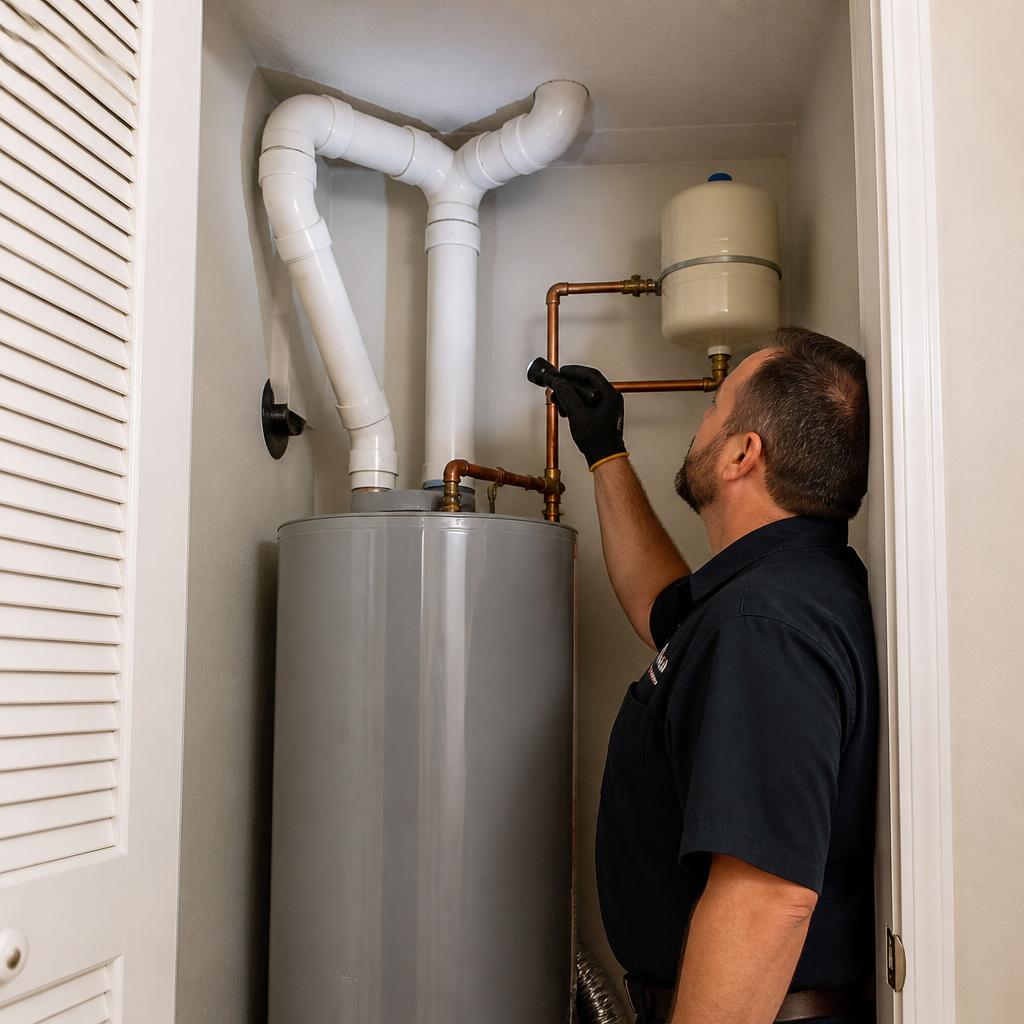
A cold shower does not automatically mean you need a new water heater. For homeowners in Raleigh, Cary, Garner and the surrounding Triangle, the first question is whether the problem is a repairable part, a supply issue or a failing storage tank. A diagnosis can help you avoid replacing equipment that still has useful life.
Start with safety, not troubleshooting
If you smell gas, leave the building immediately and contact your gas utility or emergency services from a safe location. Do not operate switches, light flames or attempt to restart the heater. If water is near electrical equipment, stay away from the wet area. Do not remove covers, touch wiring or attempt gas repairs.
Problems that may be repairable
No hot water, slow recovery or inconsistent temperature can have several causes. An electric heater may have a failed heating element or thermostat; a gas model may have an ignition, control or fuel-supply issue. These symptoms need testing rather than a guess. Tell the technician whether every fixture is affected or only one shower or faucet.
Water near the heater also needs careful inspection. A leaking connection is different from a leak through the tank body. Never cap or block the temperature-and-pressure relief valve or its discharge pipe. Discharge from that safety system requires professional evaluation.
When replacement deserves a closer look
The U.S. Department of Energy lists a typical storage-water-heater lifespan of 10–15 years. That is a planning guide, not an expiration date. The heater’s condition, maintenance history and repair cost matter alongside its age. A confirmed leak through the storage tank generally calls for replacement rather than a patch.
Repeated breakdowns, visible deterioration or a tank that no longer serves your household can also justify comparing replacement options. Ask for a diagnosis and an installed quote before deciding. A new unit should be sized for household demand and checked for compatibility with the home’s fuel, electrical supply and venting.
What discolored hot water means in Raleigh
Raleigh Water notes that old or poorly maintained water heaters can accumulate rust and sediment that affect water quality. Discoloration is not proof of a failed tank: plumbing and the water supply can also be involved. Note whether discoloration appears in hot water only or in both hot and cold water, then share that detail with the technician.
Information that helps us assess your heater
- A photo of the heater and its model label, taken from a safe position.
- The approximate age, capacity and fuel type, if known.
- Whether you have a leak, no hot water, noise or temperature changes.
- When the issue began and whether it affects the entire home.
Frequently asked questions
Should I repair or replace a 10-year-old water heater in Raleigh?
Age alone is not enough to decide. The U.S. Department of Energy gives storage water heaters a typical lifespan of 10–15 years, but condition, maintenance history and the diagnosed problem matter. Compare a written repair recommendation with an installed replacement quote before deciding.
Does a puddle around my water heater mean I need a new tank?
Not always. A connection, a nearby pipe or the relief-valve discharge can be the source. A technician should locate the leak first. A confirmed leak through the tank body generally calls for replacement; never cap or block the temperature-and-pressure relief valve or its discharge pipe.
Why is my water heater not producing hot water?
Possible causes include an electric heating element or thermostat problem, or a gas ignition, control or fuel-supply issue. Tell the technician whether every fixture is affected or only one faucet or shower. Do not remove covers, touch wiring or attempt gas repairs.
Why is my hot water brown or discolored in Raleigh?
Rust or sediment in an older water heater can affect water color, but plumbing or the water supply can also be responsible. Note whether the problem affects hot water only or both hot and cold water, and report that detail. Discoloration alone does not prove that the tank needs replacement.
What should I do if I smell gas near my water heater?
Leave the building immediately and contact your gas utility or emergency services from a safe location. Do not operate electrical switches, light flames or try to restart the heater. If leaking water is near electrical equipment, stay away from the wet area.
What information should I provide when requesting water heater service?
If safe, provide a photo of the heater and model label, its approximate age, capacity and fuel type, and a description of the leak, noise or hot-water problem. Explain when it started and whether it affects the whole home. Photos help prepare for a visit but do not replace a diagnosis.
Get help in Raleigh and the Triangle
Call (919) 880-1956 or request water heater service. If replacement is the better option, compare installation choices and request a quote.